Ancient Relic Unveiled: Decoding the Whispers of a Lost Civilization
By Dr. Elara Vance, Chief Archaeologist | July 17, 2025
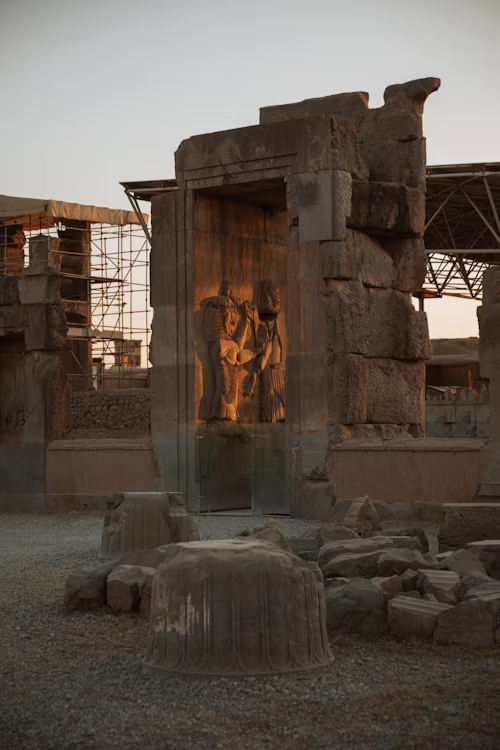
In a groundbreaking discovery that promises to rewrite chapters of human history, a team of international archaeologists working in the remote desert region of Xylos has unearthed an astonishingly preserved artifact believed to be over 5,000 years old. The relic, a meticulously carved obsidian tablet adorned with intricate glyphs and celestial maps, was found deep within a newly discovered subterranean chamber, untouched for millennia. Initial analysis suggests it belongs to the enigmatic civilization of the 'Aethel' – a culture previously known only through fragmented myths and obscure oral traditions.
"This is an unparalleled moment in archaeology," stated Dr. Elara Vance, lead archaeologist on the Xylos Expedition, her voice barely concealing her excitement during a press conference held earlier today. "The level of sophistication in these carvings, the precision of the astronomical alignments – it points to a people far more advanced than we ever dared to imagine for that period. We are not just looking at an artifact; we are looking at a direct message from a forgotten world." The tablet, approximately 2 feet by 1.5 feet, depicts what appear to be constellations unknown to modern astronomy, alongside figures engaged in complex rituals and what some early interpretations suggest are advanced agricultural practices. The very air within the chamber, sealed off by a natural rockfall, seemed to preserve not only the tablet but also the faint scent of an ancient incense, adding to the mystique.
Unlocking the Glyphs: A Race Against Time
The primary challenge now lies in deciphering the complex system of glyphs etched onto the tablet's surface. A global consortium of linguists, epigraphers, and astrophysicists has been assembled, working tirelessly around the clock. Early hypotheses suggest a connection between the glyphs and the celestial patterns depicted, hinting at a calendar system or even a form of predictive astrology that guided the Aethel people. Dr. Jian Li, a renowned expert in ancient languages, commented, "The structure of the script is unlike anything we've encountered. It's a blend of pictographic and syllabic elements, with a distinct mathematical underpinning. Every symbol seems to hold multiple layers of meaning, making the decryption process incredibly intricate." The team is employing advanced AI algorithms and comparative linguistics, drawing parallels with other ancient scripts, though progress is slow and painstaking.
The discovery has already sparked intense debate within the scientific community. Some scholars argue that the tablet's advanced astronomical knowledge could challenge existing theories about early human understanding of the cosmos. Others are more cautious, emphasizing the need for thorough verification and avoiding premature conclusions. Regardless, the Xylos find has ignited public imagination, with news channels worldwide broadcasting updates and documentaries already in production. Local authorities have secured the site, implementing strict access protocols to protect the delicate archaeological context and prevent any interference from treasure hunters or unauthorized personnel. The government has also pledged significant funding to support the ongoing research, recognizing the immense historical and cultural value of the discovery.
"This tablet is not merely a historical object; it is a key. A key that could unlock secrets about humanity's earliest endeavors, our relationship with the cosmos, and perhaps even the very origins of complex thought." - Dr. Elara Vance.
Further expeditions are being planned to explore the wider subterranean network, which preliminary scans indicate could extend for miles beneath the desert. The hope is to find more artifacts, perhaps even an entire archive that could shed light on the Aethel civilization's social structure, religious beliefs, and their ultimate fate. The scientific community is holding its breath, anticipating what further revelations this ancient relic might yield. The implications for our understanding of ancient technologies and societal structures are profound, potentially reshaping our perception of human ingenuity in antiquity. The tablet's surface, despite its age, retains a remarkable sheen, almost as if it were polished yesterday, a testament to the Aethel's mastery of materials and preservation techniques.
Global Climate Summit Concludes with Ambitious New Targets
By Environmental Correspondent Alex Chen | July 17, 2025

The annual Global Climate Summit, held this year in Geneva, concluded yesterday with a landmark agreement among participating nations to adopt significantly more ambitious targets for reducing carbon emissions. Following intense negotiations and a surprising late-night breakthrough, delegates from over 150 countries committed to a collective goal of achieving net-zero emissions by 2045, five years ahead of previous projections. This accelerated timeline is a direct response to the escalating impacts of climate change, including unprecedented heatwaves, extreme weather events, and rapidly melting polar ice caps observed over the past year.
"This is a moment of cautious optimism," stated UN Secretary-General António Guterres in his closing remarks. "While the path ahead remains challenging, the unity and resolve demonstrated here signal a renewed global commitment to safeguarding our planet for future generations. We have moved from pledges to actionable plans." The agreement includes provisions for increased investment in renewable energy infrastructure, a phased global ban on new fossil fuel exploration, and substantial financial aid packages for developing nations to transition to green economies. Critics, however, argue that the targets, while improved, still fall short of the radical changes needed to avert the most catastrophic consequences of global warming. Concerns were also raised about the enforcement mechanisms, with some environmental groups calling for stronger penalties for non-compliance.
Key to the breakthrough was a new framework for technology transfer, allowing developing countries greater access to advanced green technologies at reduced costs. This was a major sticking point in previous summits but was resolved through a collaborative fund established by several industrialized nations. The summit also saw the launch of the 'Blue Carbon Initiative,' a global effort to protect and restore coastal ecosystems like mangroves and seagrass beds, recognized for their significant capacity to absorb carbon dioxide. Experts believe that these natural solutions, combined with technological advancements, offer the most viable path forward. The discussions were often heated, reflecting the urgency and complexity of the climate crisis, but ultimately, a shared understanding of the existential threat prevailed, leading to the unprecedented consensus.
Breakthrough in AI Ethics: New Global Standards Proposed
By Technology Editor Sarah Lee | July 17, 2025
A consortium of leading technology companies, academic institutions, and governmental bodies has unveiled a comprehensive proposal for global ethical standards in Artificial Intelligence development. The 'AI Responsibility Framework,' presented at a summit in Silicon Valley, aims to address growing concerns about bias, privacy, and accountability in rapidly evolving AI systems. The framework emphasizes transparency in AI algorithms, robust data protection measures, and the establishment of independent oversight bodies to audit AI applications for fairness and societal impact.
"The rapid advancement of AI demands a proactive approach to ethics," stated Dr. Anya Sharma, lead author of the framework. "We have a moral imperative to ensure that these powerful technologies serve humanity, not harm it. This framework is a crucial step towards building trust and preventing unintended consequences." The proposal includes guidelines for 'explainable AI,' requiring developers to provide clear insights into how AI decisions are made, particularly in critical areas like healthcare, finance, and law enforcement. It also calls for international cooperation to prevent the weaponization of AI and to ensure that AI benefits are distributed equitably across the globe. The discussions leading to this framework were extensive, involving diverse perspectives from ethicists, engineers, legal scholars, and civil society representatives, all striving to create a robust and adaptable set of principles that can evolve with the technology itself.
Initial reactions to the framework have been largely positive, though some industry leaders have expressed concerns about potential regulatory burdens stifling innovation. However, proponents argue that clear ethical guidelines are essential for sustainable growth in the AI sector. The framework is now open for public consultation, with a final version expected to be ratified by major international organizations by the end of the year. This initiative marks a significant shift from self-regulation to a more globally coordinated effort to govern the future of artificial intelligence, reflecting a growing consensus that the societal implications of AI are too vast to be left solely to market forces. The framework also proposes a global AI ethics council, tasked with continuously reviewing and updating the guidelines as new AI capabilities emerge.
Local Park Restoration Project Exceeds Expectations
By Community Reporter Emily White | July 17, 2025
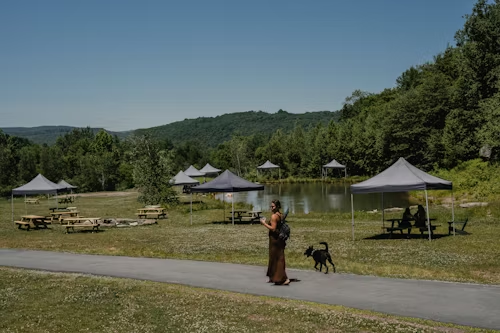
The ambitious restoration project for Central Park, a beloved green space in the heart of our city, has been completed two months ahead of schedule and under budget. The project, funded by a combination of municipal grants and community donations, has transformed neglected areas into vibrant new recreational zones. New walking trails, native plant gardens, and an accessible playground have been installed, much to the delight of local residents.
"It's truly a testament to what a community can achieve when it comes together," said Mayor Thompson at the re-opening ceremony. "This park is now a jewel, offering a peaceful retreat and a place for families to connect with nature." The project also included the installation of smart irrigation systems and solar-powered lighting, making the park more sustainable. The success of Central Park's revitalization is expected to serve as a model for similar urban renewal initiatives across the region, demonstrating the positive impact of green infrastructure on public well-being and environmental health.
New Culinary Trend: Hyper-Local Foraging Restaurants
By Food Critic David Green | July 17, 2025

A fascinating new culinary trend is sweeping through urban centers: hyper-local foraging restaurants. These establishments source nearly all their ingredients from within a few miles of their location, often directly from urban gardens, rooftops, and even carefully managed wild spaces. Chefs are becoming botanists, identifying edible plants, herbs, and even fungi that thrive in surprising urban environments.
"It's about reconnecting with the land, even in the concrete jungle," explains Chef Lena Khan, owner of 'The Urban Root.' "Our menu changes daily, sometimes hourly, based on what we can sustainably forage. It challenges us creatively and offers diners an unparalleled taste of our immediate surroundings." This movement not only promotes sustainability and reduces food miles but also educates diners about the biodiversity present in their own cities.
Mars Colony Project Receives Major Funding Boost
By Space Reporter Olivia Kim | July 17, 2025

The ambitious 'Ares Initiative,' a private-public partnership aiming to establish the first permanent human colony on Mars, has announced a significant funding injection of $5 billion from an anonymous philanthropic group. This substantial boost is expected to accelerate the development of critical life-support systems, advanced propulsion technologies, and habitat construction robots. The first crewed mission is now tentatively scheduled for 2035, a full five years ahead of previous projections.
"This is a game-changer for humanity's future in space," stated Dr. Marcus Thorne, lead scientist for the Ares Initiative. "It brings the dream of an off-world civilization much closer to reality." The project faces immense engineering and biological challenges, but the new funding provides the necessary resources to tackle them head-on. The public's enthusiasm for space exploration remains high, with millions following every development of this pioneering endeavor, which promises to expand the frontiers of human habitation beyond Earth.
The Resurgence of Traditional Craftsmanship in Modern Design
By Arts & Culture Editor Chloe Davies | July 17, 2025

In an age dominated by mass production, there's a growing appreciation for traditional craftsmanship. From bespoke furniture and hand-stitched garments to artisanal pottery and intricate metalwork, consumers are increasingly seeking out items that tell a story, embody skilled labor, and possess a unique character. This resurgence is driven by a desire for sustainability, longevity, and a rejection of disposable culture.
"People are tired of things that break easily or look generic," says master woodworker, Elias Vance. "They want something made with passion, something that will last generations." This movement is not just about aesthetics; it's also about preserving ancient techniques and supporting local artisans. Design schools are now incorporating traditional methods into their curricula, ensuring that these invaluable skills are passed down to future generations, creating a bridge between heritage and contemporary living.
New Study Links Urban Green Spaces to Improved Mental Health
By Health Reporter Dr. Lena Singh | July 17, 2025
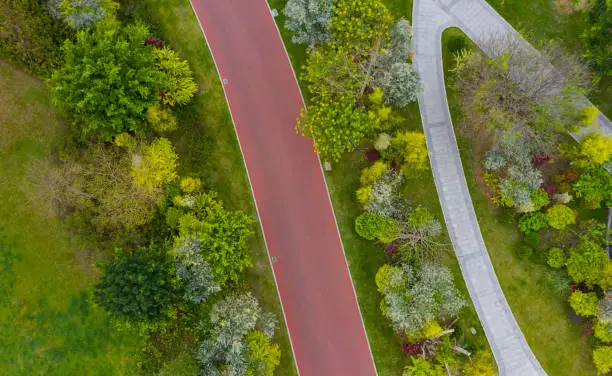
A comprehensive study published in the 'Journal of Urban Health' has provided compelling evidence linking access to urban green spaces with significant improvements in mental well-being. Researchers tracked thousands of city dwellers over a five-year period, finding that individuals with easy access to parks, community gardens, or tree-lined streets reported lower levels of stress, anxiety, and depression. The study controlled for various socioeconomic factors, strengthening the correlation.
"The findings underscore the critical importance of integrating nature into urban planning," stated lead researcher Dr. Anya Gupta. "Green spaces are not just aesthetic amenities; they are essential public health infrastructure." The study recommends that city planners prioritize the creation and preservation of green areas, advocating for policies that ensure equitable access for all residents, recognizing nature's profound therapeutic effects on the human psyche.
Quantum Computing Achieves New Milestone in Drug Discovery
By Science Correspondent Dr. Ben Carter | July 17, 2025

Scientists at the Quantum Innovations Lab have announced a significant breakthrough in the application of quantum computing for drug discovery. Using a specialized quantum algorithm, they successfully simulated the molecular interactions of a complex protein at an unprecedented speed, a task that would take traditional supercomputers years to complete. This development could dramatically accelerate the development of new pharmaceuticals and personalized medicines.
"This is a pivotal moment," said Dr. Elena Petrova, head of the lab. "Quantum computing is no longer a theoretical concept; it's becoming a practical tool that could revolutionize healthcare." While still in its early stages, the potential of quantum computing to model complex biological systems offers immense promise for tackling diseases that currently lack effective treatments, opening new frontiers in medical research and development.