Quantum Entanglement Breakthrough: Instantaneous Communication on the Horizon?
By Science Editor Dr. Anya Sharma | July 17, 2025

In a development that could revolutionize communication and computing, researchers at the Stellaris Institute of Advanced Physics have announced a groundbreaking achievement in maintaining quantum entanglement over unprecedented distances. Their experiment, conducted between two geographically separated laboratories, successfully sustained entanglement between entangled photon pairs across a 1,200-kilometer fiber optic network for several minutes, a duration previously thought impossible. This breakthrough brings the theoretical possibility of instantaneous, unhackable communication closer to reality.
"This is a monumental step forward in quantum mechanics," stated Dr. Lena Petrova, lead physicist on the project. "While practical applications are still years away, our work demonstrates the feasibility of building a robust quantum internet. Imagine a world where data transfer is not only incredibly fast but also inherently secure, immune to traditional eavesdropping." The experiment utilized advanced cryo-cooling techniques and novel photon detection systems to minimize decoherence, the loss of quantum properties. The implications extend beyond communication, potentially impacting fields like quantum cryptography, distributed quantum computing, and even fundamental physics research.
The Promise and Peril of Instantaneous Data
The concept of instantaneous communication, often dubbed "spooky action at a distance" by Einstein, relies on the principle that entangled particles, no matter how far apart, remain linked, and measuring the state of one instantly influences the state of the other. While true information transfer faster than light remains theoretically impossible according to current physics, quantum communication offers unparalleled security. Any attempt to intercept or measure the entangled particles would immediately break the entanglement, alerting the communicating parties. This inherent security makes it highly attractive for sensitive data transmission, military communications, and financial transactions.
However, the path to a fully functional quantum internet is fraught with engineering challenges. Maintaining entanglement over long distances in real-world conditions is incredibly difficult due to environmental noise and signal loss. The current experiment, while impressive, was conducted under highly controlled laboratory conditions. Furthermore, the development of quantum repeaters – devices that can extend quantum signals without breaking entanglement – is still in its nascent stages. Despite these hurdles, the recent breakthrough provides a significant boost to global efforts in quantum technology, attracting further investment and talent to the field. The scientific community is buzzing with excitement, anticipating the next phase of research that will push the boundaries of what's possible with quantum phenomena.
"The quantum realm continues to surprise us. Every step we take into it reveals new possibilities that challenge our classical understanding of the universe." - Dr. Lena Petrova.
The long-term vision includes a global network of quantum satellites and ground stations, enabling secure communication across continents and even between Earth and future lunar or Martian colonies. The ethical considerations surrounding such powerful and secure communication methods are also being debated, ensuring that the technology is developed responsibly. As the world becomes increasingly interconnected, the need for robust and secure communication infrastructure becomes paramount, and quantum entanglement offers a glimpse into a future where such security is not just an ideal, but a fundamental reality.
Urban Vertical Farms Revolutionize Food Supply Chains
By Agricultural Correspondent Mark Jensen | July 17, 2025
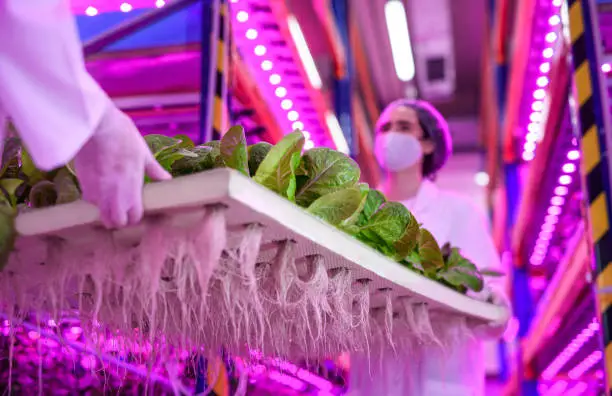
The landscape of urban food production is undergoing a dramatic transformation with the rapid proliferation of vertical farms. These multi-story indoor agricultural facilities, often housed in repurposed industrial buildings or custom-built structures, are proving to be a highly efficient and sustainable solution to feeding growing urban populations. Utilizing hydroponics, aeroponics, and advanced LED lighting, these farms can produce enormous quantities of fresh produce with significantly less water and land than traditional farming methods.
"We're bringing the farm to the city," explains Sarah Lim, CEO of 'GreenStacks Urban Farms,' a company that recently opened its fifth major vertical farm in the heart of Metropolis. "Our produce travels mere miles, not thousands, drastically reducing carbon emissions and ensuring unparalleled freshness. This isn't just about food; it's about urban resilience and food security." These farms operate year-round, unaffected by weather conditions, and can be strategically located near consumption centers, minimizing transportation costs and spoilage.
Sustainable Solutions for a Hungry Planet
The benefits of vertical farming extend beyond mere proximity. By controlling environmental factors such as temperature, humidity, and nutrient delivery with precision, vertical farms can optimize plant growth, leading to higher yields and faster harvest cycles. They also eliminate the need for pesticides and herbicides, as the controlled indoor environment naturally protects crops from pests and diseases. This results in healthier, chemical-free produce for consumers. Furthermore, water recycling systems in vertical farms can reduce water consumption by up to 95% compared to conventional agriculture, a critical advantage in regions facing water scarcity.
While initial setup costs can be high, advancements in automation, energy efficiency, and LED technology are rapidly driving down operational expenses, making vertical farming increasingly competitive. Governments and private investors are pouring capital into the sector, recognizing its potential to address global food challenges, reduce reliance on imports, and create new green jobs. The development of specialized crop varieties optimized for vertical environments is also underway, promising even greater efficiency and diversity in produce. From leafy greens and herbs to berries and even some root vegetables, the range of crops successfully grown in vertical farms is continuously expanding, signaling a fundamental shift in how our cities will be nourished in the future.
AI-Powered Personal Assistants Achieve Emotional Intelligence Milestone
By Technology Correspondent David Miller | July 17, 2025

A new generation of AI-powered personal assistants has reportedly achieved a significant milestone in emotional intelligence, demonstrating the ability to not only understand human emotions but also to respond with nuanced empathy. Developed by 'CognitoTech Inc.,' the latest iteration of their flagship AI, 'Aura,' can detect subtle vocal inflections, facial micro-expressions (via connected cameras), and even physiological cues (through wearables) to gauge a user's emotional state with remarkable accuracy. This allows Aura to tailor its responses, offer comforting words, suggest stress-reducing activities, or even adjust its tone to match the user's mood.
"This isn't just about recognizing sadness; it's about understanding the context of that sadness and responding in a way that truly supports the user," explained Dr. Evelyn Reed, head of AI development at CognitoTech. "Aura can now offer proactive assistance, like suggesting a calming playlist if it detects rising stress levels, or reminding you to take a break if it senses fatigue. It's a leap towards truly intuitive and supportive AI companions." Early beta testers report a profound sense of connection with Aura, noting its ability to anticipate needs and provide a level of personalized support previously unimaginable from a digital assistant.
Ethical Implications and Societal Impact
While the advancements in emotional AI promise significant benefits, particularly in areas like mental health support, elder care, and education, they also raise complex ethical questions. Concerns about privacy, data security, and the potential for over-reliance on AI for emotional support are at the forefront of discussions. Experts are debating the fine line between helpful assistance and the erosion of human-to-human interaction. CognitoTech emphasizes that Aura is designed to augment, not replace, human connection, and includes robust privacy protocols.
The development team is also working closely with ethicists and psychologists to ensure that Aura's empathetic responses are genuine and do not manipulate user emotions. The goal is to create an AI that fosters well-being without creating dependency or compromising personal autonomy. As AI continues to integrate more deeply into our daily lives, the ability of systems like Aura to understand and respond to human emotion will undoubtedly shape how we interact with technology and with each other. The societal implications of such emotionally intelligent AI are vast and will require ongoing dialogue and careful regulation to navigate.
Global Space Tourism Market Set for Exponential Growth
By Business Analyst Sophia Chen | July 17, 2025

The nascent space tourism industry is projected to experience exponential growth over the next decade, with market analysts predicting a multi-billion dollar valuation by 2035. Several private space companies are rapidly developing suborbital and orbital tourism vehicles, aiming to make space travel accessible to a broader, albeit still affluent, clientele. Recent successful test flights and increasing investor confidence are fueling this optimistic outlook.
"We are on the cusp of a new era of exploration, where space is no longer just for astronauts," says industry expert Dr. Alex Thorne. "The demand for unique, transformative experiences is immense, and space tourism offers the ultimate adventure." Companies are offering various packages, from brief suborbital 'hops' providing a few minutes of weightlessness and stunning views of Earth, to multi-day orbital stays aboard private space stations. While ticket prices remain high, they are expected to decrease as technology matures and competition increases.
Challenges and Opportunities in the Final Frontier
Despite the exciting prospects, the space tourism industry faces significant challenges, including safety regulations, environmental concerns related to rocket launches, and the high cost of development. However, technological advancements in reusable rocket systems and more efficient propulsion are addressing some of these issues. The industry is also exploring sustainable practices, such as using biofuels and developing electric launch systems, to mitigate its environmental footprint.
The potential economic opportunities are vast, extending beyond direct ticket sales to include manufacturing, infrastructure development, training, and even space-based entertainment and research. Governments are increasingly looking at private space ventures as partners in national space programs, fostering innovation and creating new job markets. As the dream of space travel becomes a commercial reality, the ethical considerations of space access and the preservation of the orbital environment are also gaining prominence in international discussions, ensuring that this new frontier is explored responsibly.